VectorShift
No-code platform to build AI assistants and workflow automations
No-code platform to build AI assistants and workflow automations
What it can do
Build AI workflows with no code
SupervisedDrag-and-drop pipeline builder for assembling LLM applications, assistants, and automations from modular components, without coding.
sourceGround apps in live-synced knowledge bases
SupervisedConnects and continuously syncs sources such as Google Drive, OneDrive, Notion, Salesforce, HubSpot, and Airtable, with retrieval methods including re-ranking, hybrid search, and metadata filtering, and returns sourced answers with document citations.
sourceDeploy as chat, form, search, or voice interfaces
SupervisedPublishes built pipelines as user-facing chatbots, forms, search engines, or voice interfaces, and supports workflow triggers from Slack and email.
sourceProgrammatic access via SDK and MCP
SupervisedOffers a Python SDK and API to run pipelines and manage knowledge bases from code, and reportedly exposes an MCP server so external agents (Claude, ChatGPT, Cursor) can launch workflows and query knowledge bases.
source
Overview
VectorShift is a no-code platform for building, deploying, and managing AI assistants, chatbots, search engines, and workflow automations. Founded in 2023 (Y Combinator Summer 2023) and based in New York City, it lets technical and non-technical teams compose LLM applications visually, or via a Python SDK and API.
What it does
A drag-and-drop pipeline builder assembles LLM applications from modular components. Apps are grounded in live-synced knowledge bases (Google Drive, OneDrive, Notion, Salesforce, HubSpot, Airtable and more), with retrieval methods such as re-ranking, hybrid search, and metadata filtering, and answers carry document-level citations. Finished pipelines deploy as chat, form, search, or voice interfaces, and can be triggered from Slack or email. The platform is model-agnostic across OpenAI, Anthropic, Google, Mistral, Llama, AWS, and Hugging Face.
Classification note
VectorShift is a building platform, not a single end-user agent. The autonomy of anything you create depends on how you wire the pipeline, so we list it conservatively as supervised-agent, with a human approving consequential steps.
Integrations & setup
SaaS with API and SDK access. Knowledge-base connectors live-sync from common cloud sources, and the platform reportedly exposes an MCP server so external agents can run pipelines and query knowledge bases. Security features include SOC 2 Type II, GDPR, and HIPAA compliance.
Pricing
Freemium: a free Starter plan plus paid tiers reported to start around $20/month (annual). Higher Team, Pro, and Business tiers exist, with a custom Enterprise plan. Confirm current numbers on the pricing page.
Best for / not for
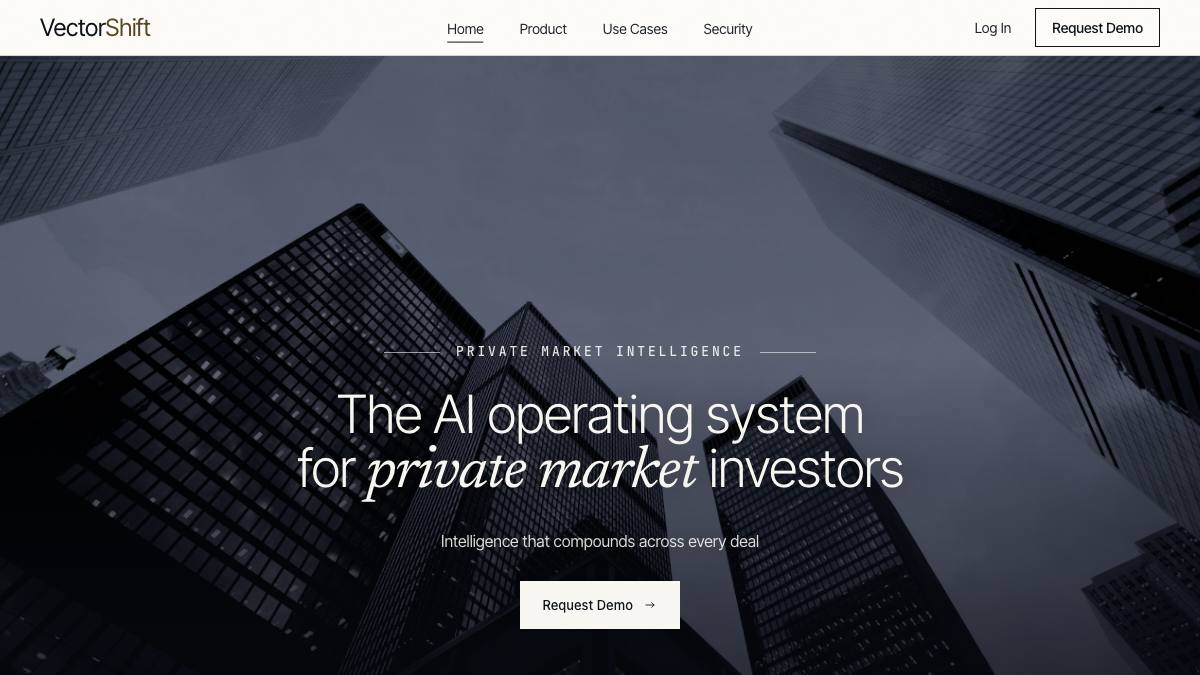
Best for teams that want to build retrieval-grounded assistants, internal search, and automations without code, while keeping the option to drop into an SDK. Less suited to buyers needing a large native-integration catalog or a single turnkey end-user agent. Note the homepage has shifted toward a private-markets vertical, which may indicate where new investment is going.
Alternatives
Stack AI and Relevance AI are comparable no-code agent platforms; Dify, Flowise, and Langflow are builder-style (often open-source) alternatives; Gumloop and n8n cover broader workflow automation.
What people are saying
We aggregate real LinkedIn discussion into sentiment for the agents people search most. VectorShift isn't tracked yet, want it added? Request tracking.
Used this agent?
Sign in to upvote, rate, follow, or leave a comment.