Hippocratic AI
Voice-first, non-diagnostic AI healthcare agents for patient outreach
Last reviewed 2026-06-18
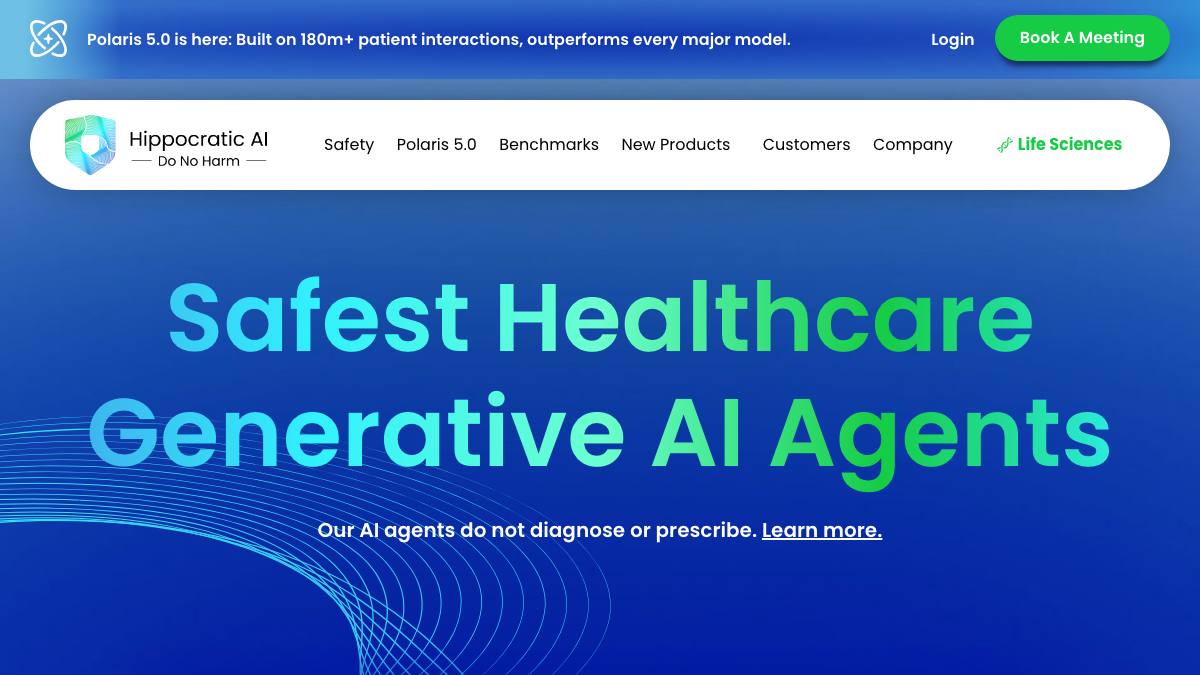
Hippocratic AI builds patient-facing, voice-first generative AI agents for low-risk, non-diagnostic tasks historically handled by nurses, medical assistants, and care coordinators, such as post-discharge follow-up, chronic-care check-ins, medication-adherence support, scheduling, and care-gap outreach. The company explicitly positions the agents as non-diagnostic, stating they do not diagnose or prescribe. The product runs on the company's proprietary Polaris constellation architecture, described as a system of multiple specialized LLMs (a conversational core plus task-specific specialist models) designed to reduce errors and enforce safety. All accuracy, safety, and outcome figures cited by the company are vendor claims and are not independently verified; this entry treats them as such and does not present clinical safety as established fact.
What it can do
Conduct patient outreach voice calls
SupervisedMakes and receives calls for follow-up, check-ins, and reminders, running multi-step patient conversations within a defined task.
sourceEscalate to clinical staff
SupervisedThe company states the agent detects concerning responses and alerts clinicians, escalating when clinical judgment is needed.
sourceProvide non-diagnostic guidance
SupervisedCounsels on medication adherence and answers questions while, per the company, explicitly not diagnosing or prescribing.
sourceRun on the Polaris safety constellation
SupervisedThe company states multiple specialized LLMs work together to reduce errors and enforce safety thresholds. This is a vendor claim and not independently verified.
source
Strengths
- +Purpose-built safety architecture for a narrow, explicitly non-diagnostic scope
- +Voice-first design for outreach at scale, with the company citing low time-to-first-audio latency
- +Strong enterprise validation signals, including named deployments and major investors
Limitations
- −All accuracy, safety, and outcome metrics are vendor-reported and not peer-verified; independent validation is warranted
- −Augments rather than replaces clinical judgment and depends on human escalation; carries HIPAA, scope-of-practice, and regulatory exposure
- −Limited public transparency on pricing, EHR integrations, and documentation
Overview
Hippocratic AI builds voice-first, patient-facing AI agents for low-risk, non-diagnostic tasks such as post-discharge follow-up, chronic-care check-ins, and medication-adherence support. The company explicitly states the agents do not diagnose or prescribe.
What it does
The agents conduct outreach calls, run multi-step patient conversations, and, per the company, detect concerning responses and escalate to clinicians. They run on Polaris, a proprietary constellation of specialized LLMs the company says is designed for safety. Every accuracy and outcome figure cited by the company is a vendor claim and is not independently verified.
Integrations & setup
Delivered as a managed enterprise service. Named deployments and partners include Universal Health Services and WellSpan Health, which are also reported investors. Specific EHR integrations were not confirmed on an official page at the time of this review.
Pricing
Enterprise, contact-sales. No official public pricing.
Best for / not for
Best for health systems and payers that want to scale non-diagnostic patient outreach with human escalation. Not appropriate for diagnostic or prescribing use, and buyers should independently validate the company's safety and outcome claims.
Alternatives
Nabla and Abridge focus on ambient clinical documentation rather than patient-facing voice outreach.
What people are saying
We aggregate real LinkedIn discussion into sentiment for the agents people search most. Hippocratic AI isn't tracked yet, want it added? Request tracking.
Used this agent?
Sign in to upvote, rate, follow, or leave a comment.
FAQ
Does Hippocratic AI diagnose patients?+
No. The company explicitly positions its agents as non-diagnostic, stating they do not diagnose or prescribe, and that they escalate to clinical staff when clinical judgment is required.
Is it safe?+
The company describes a Polaris safety architecture and cites high accuracy and outcome figures, but these are vendor claims that have not been independently or peer-verified. Buyers should seek independent validation.
Sources
- Hippocratic AI (official site) · accessed 2026-06-18
- Hippocratic AI launches Polaris 5.0 · accessed 2026-06-18
- Hippocratic AI completes $141M Series B (Business Wire) · accessed 2026-06-18
- UHS launches Hippocratic AI agents for post-discharge engagement · accessed 2026-06-18
Last reviewed 2026-06-18